
Specialist Finance for Care Homes, GP Practices, Dental Surgeries and Pharmacies
A care home sale rarely goes through on the guide price alone. Lenders want to know what’s actually generating the income before they’ll commit, and that’s where a lot of these deals stall.
We work with care operators, GP practices, dental surgeries and pharmacies across the UK, arranging finance for acquisitions, refinancing and expansion. Healthcare property doesn’t behave like a normal commercial purchase. A hairdresser’s or an office unit gets valued more or less on bricks and mortar. A care home gets valued on what it earns, and that changes almost everything about how a lender approaches the deal.
Why Healthcare Lending Works Differently
Most commercial lenders price a loan against the property. Healthcare lenders price it against the business running inside the property. Occupancy rates, staffing costs, CQC rating, local authority fee rates versus private fee rates, the mix of residents – all of it gets picked apart before a number comes back.
This is good news if you’re buying a well-run home with strong occupancy and a clean inspection history. It’s not such good news if you’re buying a home with patchy occupancy or an “Requires Improvement” rating, even if the price looks like a bargain. The lender sees the same numbers you do, and they’ll usually see them first.
GP practices and dental surgeries sit in a slightly different bracket. The patient list has value, but so does the NHS contract itself, or in the case of a dental practice, the mix of NHS and private work. A practice with 80% private revenue gets treated very differently to one that’s almost entirely NHS-funded, and the funding available often reflects that split quite sharply.
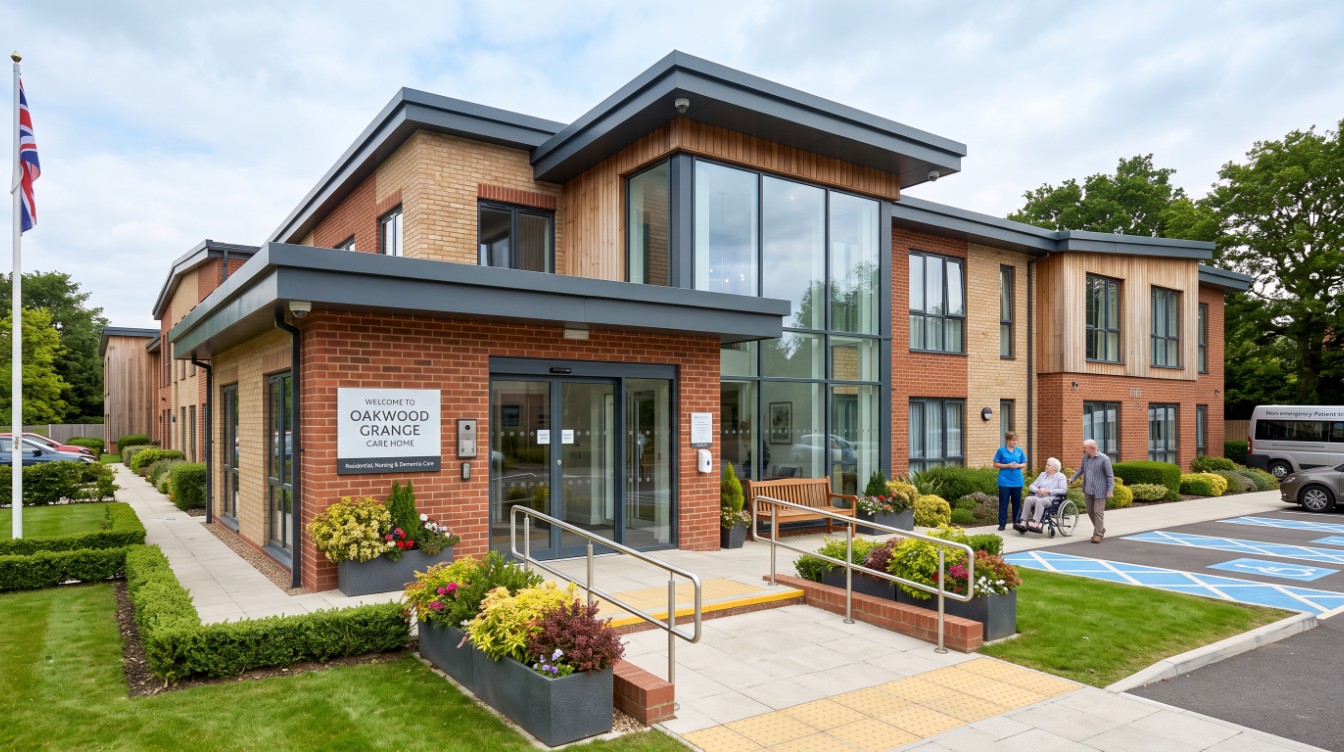
Buying a Care Home
The valuation question comes up early in almost every conversation we have about care home acquisitions. Buyers tend to assume a multiple of EBITDA, and that’s broadly right, but the multiple moves around more than people expect. A home with strong occupancy, no agency staff dependency and a CQC rating of Good or Outstanding can sit well above the multiples applied to a struggling home in the same town.
Loan-to-value also depends heavily on what’s being bought. A freehold home with land for expansion opens up more lending options than a leasehold unit on a short lease. We’ve placed commercial mortgages for care homes where the freehold alone carried enough of the risk that the lender was comfortable lending close to 75% of purchase price. We’ve also seen leasehold deals where 50% was the ceiling, purely because of how little time was left on the lease.
Deposit requirements usually land somewhere between 25% and 35% of the purchase price, though this isn’t fixed. Operators with a track record – multiple homes already, a history of improving CQC ratings after acquisition – can sometimes access higher leverage than a first-time buyer attempting their first purchase.
Refinancing an Existing Home or Practice
A lot of our refinancing enquiries come from operators sitting on variable rates set years ago, now looking at what a fixed-rate facility would do to their monthly costs. Others want to release equity through a commercial remortgage to fund a second site, or to cover a renovation that current reserves won’t stretch to.
Refinancing a healthcare asset means going through the same scrutiny as a purchase, sometimes more so, because the lender is also looking at how the business has performed since the current facility was arranged. Occupancy trends matter here. So does any change in CQC rating, up or down. A home that’s improved its rating since the last valuation can often refinance on noticeably better terms than the original purchase deal.
Expansion Finance
Expansion covers a few different things depending on who’s asking. Sometimes it’s a straightforward extension – adding beds to an existing home. Sometimes it’s a second site entirely, funded through a bridging loan to move quickly while a longer-term facility is arranged behind it. Sometimes it’s converting part of a GP practice into additional consulting rooms to bring in another partner.
Bed extensions tend to be the most straightforward to finance, because the lender is lending against a known, performing asset with an addition bolted on. A second site is a bigger ask. The lender wants to see that the first site is performing well enough to support the operator taking on more, and they’ll usually want management accounts covering at least the last couple of years before they’ll even start pricing it.
What Lenders Actually Look For
CQC ratings matter more than almost anything else in this sector. A “Good” or “Outstanding” rating opens doors that stay firmly shut for a home rated “Requires Improvement,” regardless of how good the numbers otherwise look. If there’s a poor rating in the recent past, lenders will ask what’s changed since, and they’ll want evidence, not just assurances.
Occupancy levels get scrutinised closely too, and not just the headline figure – lenders want to know whether occupancy has been stable or whether it’s been propped up temporarily. Staffing costs come under the microscope as well, particularly agency staff reliance, which most lenders treat as a red flag if it’s running high.
Fee income mix matters for care homes in a similar way to the NHS/private split for GP and dental practices. Self-funders paying private rates generally support a stronger valuation than a home relying heavily on local authority placements, where fee rates are typically lower and under more political pressure.
Getting the Right Structure
Healthcare finance isn’t one product. Depending on the deal, we might be looking at commercial mortgages, bridging finance to move quickly on a time-sensitive purchase, asset finance for equipment, or a combination of several facilities structured together. Partnership structures and ownership changes – bringing in a new partner, buying out a retiring one – bring their own complications, and getting the structure wrong at the outset tends to cost more to unpick later than it would have cost to get right first time.

Frequently Asked Questions
Can I get finance to buy a care home with no healthcare sector experience?
Yes, but it’s harder. Lenders usually want a strong management team in place or a track record in a related sector such as hospitality, since some won’t consider first-time buyers with no relevant background at all.
How long does care home acquisition finance take to arrange?
Straightforward purchases typically complete in six to eight weeks. Deals with a poor CQC history, an unusual ownership structure or multiple properties can take three months or more.
Can I refinance a care home that's currently rated 'Requires Improvement' by CQC?
Yes, but options narrow. Some specialist lenders will still consider it, usually at a higher rate and lower leverage, particularly where a credible improvement plan is already underway.
Do GP practices need a different type of finance to care homes?
Yes. GP practice finance focuses more on the patient list, NHS contract and partnership structure, while care home finance leans on occupancy, staffing and CQC performance.
Will a lender fund a pharmacy purchase in the same way as a care home?
Not quite. Pharmacy lending is based mainly on NHS dispensing contract value and prescription volumes rather than occupancy or CQC ratings, so different lenders are typically used.
Do I need a specialist healthcare lender, or will a mainstream bank do?
It depends on the deal. Mainstream banks can fund straightforward, well-performing homes or practices, but a complex CQC history, leasehold structure or unusual ownership usually needs a specialist healthcare lender.
If you’re looking at a care home, GP practice, dental surgery or pharmacy purchase, refinance or expansion, get in touch and we’ll talk through what’s realistic for your situation and which lenders are likely to be the best fit. As a whole-of-market commercial finance broker working with clients across the UK and internationally, we can confirm which lenders are likely to engage with your deal, what loan to value and rate to expect, and whether the property is better suited to a commercial mortgage, a bridging facility or a combination of several, before anything goes to a lender.
Commercial Finance Network is directly authorised and regulated by the Financial Conduct Authority.
Buy-to-let and other business finance is not regulated by the Financial Conduct Authority. Your property may be repossessed if you do not keep up repayments on a loan secured against it.
Call us on 01494 622 111 or email info@cfnuk.com to speak to a specialist directly.
Related Pages
- Commercial Mortgages – longer-term finance secured against a commercial property, the usual route for an outright care home or practice purchase.
- Business Loans – unsecured or secured working capital for operators who need funds without putting up the property itself.
- Asset Finance – funding for equipment, fixtures or specialist machinery, often used alongside a purchase or expansion.
- Commercial Property Remortgage – refinancing an existing facility onto better terms or releasing equity for a second site.
- Bridging Loans – short-term finance to move quickly on a time-sensitive purchase while a longer-term facility is arranged.